11 Weeds That Look Like Grass — How to Tell Them Apart
You're walking across your lawn and something catches your eye. A patch that's a little too light. A blade that's a little too wide. Something that grows back faster than everything else after you mow. It looks like grass... but it doesn't quite belong.
You might be looking at a grassy weed.
These are the sneakiest weeds in any lawn. Broadleaf weeds like dandelions are easy to spot — they look nothing like grass. But grassy weeds blend right in. They hide in plain sight until they spread, and by then they're hard to get rid of. The first step to winning is simple: figure out what you're actually looking at.
Here are the 11 weeds most often mistaken for grass, the one tell that gives each one away, and a quick test that sorts most of them in about five seconds.
The 5-Second Test: Roll the Stem
Before you memorize a single weed, learn this one trick. It's the fastest way to narrow things down.
Pinch a stem near the base and roll it between your fingers.
- Round or flat stem means a grass or a grassy weed (like crabgrass or quackgrass).
- Triangular stem with three sides means a sedge — almost always nutsedge. The old gardener's rhyme is "sedges have edges."
The 11 Grassy Weeds at a Glance
| Weed | The one tell | Where it shows up |
|---|---|---|
| Crabgrass | Flat, star-shaped sprawl; wide pale blades | Hot, thin, short-mowed lawns (summer) |
| Nutsedge | Triangular stem; outgrows the lawn after mowing | Wet or poorly drained spots (summer) |
| Quackgrass | Clasping auricles wrapping the stem | Patches; spreads underground (spring–fall) |
| Goosegrass | Silvery-white center; wheel-spoke seed heads | Compacted soil, paths, edges (summer) |
| Annual bluegrass | Boat-shaped tip; low pale seed heads | Cool, moist lawns (spring) |
| Foxtail | Bushy fox-tail / bottlebrush seed head | Sunny, disturbed areas (summer) |
| Johnsongrass | Bold white midrib; very tall | Field edges, neglected areas (summer) |
| Tall fescue (wrong spot) | Coarse, dark, wide clumps that feel rough | Mixed into fine-bladed lawns |
| Creeping bentgrass | Very fine blades in a dense, off-color mat | Puffy patches that don't match (cool season) |
| Carpetgrass | Wide, blunt-tipped blades; flat carpet | Wet, low-fertility southern lawns |
| Dallisgrass | Clump from a central crown; star-spaced seed stalks | Returns yearly from the same spot (summer) |
Now let's look at each one up close.
1. Crabgrass
The most common grassy weed in America. It sprawls flat from a center point like a star — or a crab's legs — with wide, coarse, light-green blades. It loves heat, thin spots, and lawns mowed too short. Crabgrass is an annual, so it dies every winter, but a single plant drops an enormous number of seeds first.
The tell: a low, flat, star-shaped sprawl with pale, wide blades.
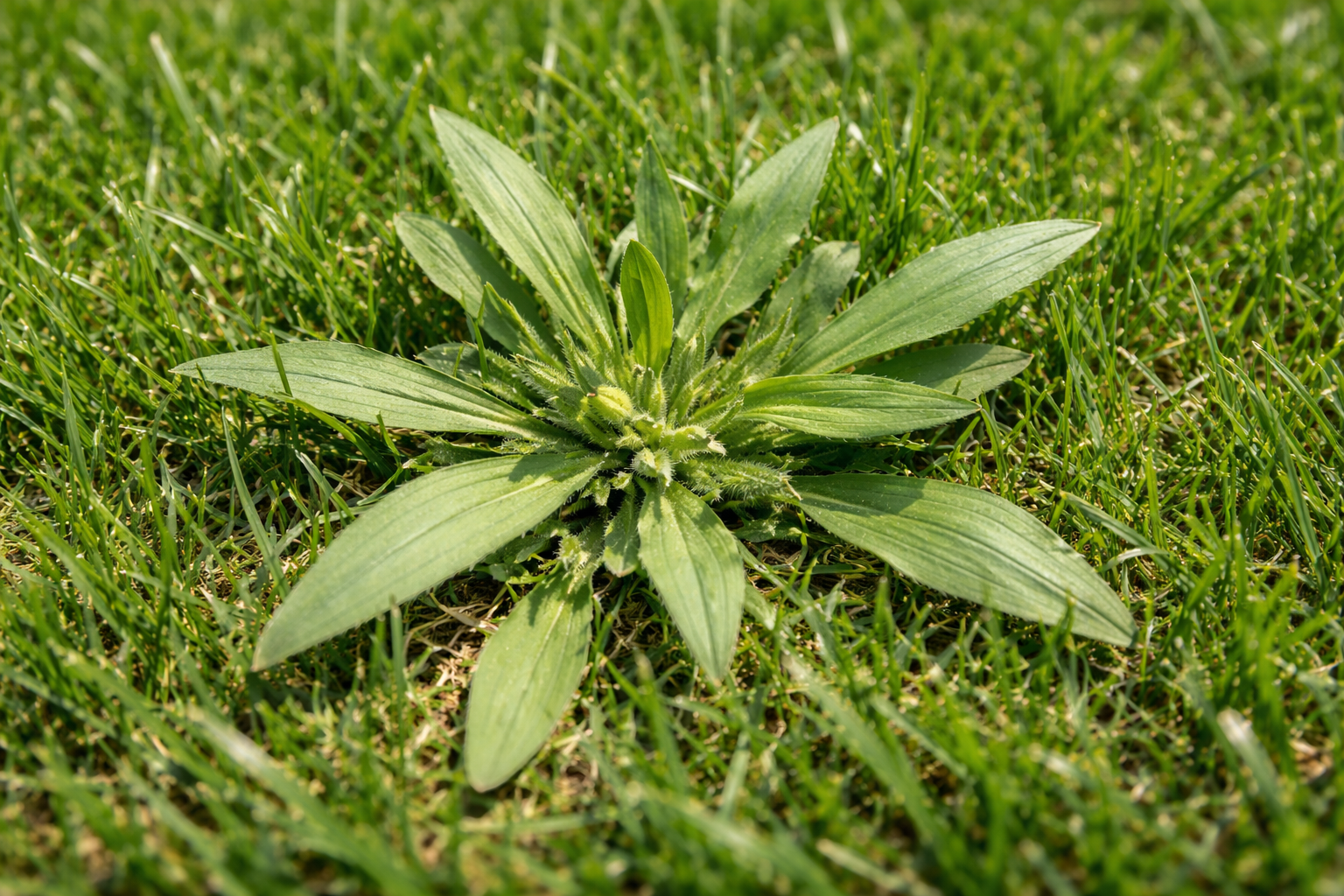
Already sure it's crabgrass? Here's how to identify and get rid of crabgrass before it takes over.
2. Nutsedge (Yellow or Purple)
Not technically a grass at all — it's a sedge. The leaves are glossy, stiff, and a bright lime or neon green, and they grow noticeably faster than your lawn, shooting up above everything else within a day or two of mowing.
The tell: roll the stem — three flat sides means nutsedge. And if one weed is always taller than the rest right after you cut, that's it.
3. Quackgrass
The best grass mimic on this list. It's coarse, dull blue-green, grows upright in patches, and spreads aggressively by underground runners called rhizomes.
The tell: clasping auricles — small, claw-like appendages that wrap around the stem where the blade meets it. True lawn grasses don't have them.
4. Goosegrass
Looks like flat crabgrass but with a white or silver center where the stems meet. Its seed heads fan out like the spokes of a wheel, which is why some people call it "silver crabgrass."
The tell: a pale silvery center and zipper-like seed-head spikes.
5. Annual Bluegrass (Poa annua)
Bright lime-green tufts, just a shade lighter than the rest of your lawn. It blends in beautifully — until it sends up little whitish seed heads, even when mowed short.
The tell: a boat-shaped blade tip (curved like the bow of a canoe) and pale seed heads sitting low in the lawn.
6. Foxtail
Grassy and upright, with an unmistakable bushy seed head shaped like a fox's tail or a bottle brush.
The tell: the soft, bristly, cattail-style seed head.
7. Johnsongrass
Tall and fast-growing, with broad blades and a bold white midrib running down the center. Young plants look grassy; mature ones can reach several feet.
The tell: the prominent white midrib and corn-like growth — it gets far too tall for a lawn.
8. Tall Fescue (in the Wrong Place)
This one is a grass — just not the grass you want if the rest of your lawn is fine-bladed. It forms coarse, dark-green clumps that stand out by texture more than color.
The tell: wide, rough, dark clumps that feel coarser than the lawn around them. (Not sure which grass you actually want? See what type of grass do I have.)
9. Creeping Bentgrass
Very fine, thin blades forming a dense, low mat — usually a slightly different shade than the rest of the lawn, like a puffy patch that doesn't match.
The tell: super-fine blades packed into a dense, off-color patch.
10. Carpetgrass
Broad blades with blunt, rounded tips that form a low, dense carpet. Common in wet, low-fertility lawns in the South.
The tell: wide, blunt-tipped blades and a flat, carpet-like spread.
11. Dallisgrass
A clumping perennial with tall, sparse seed stalks that shoot up fast after mowing. It's often confused with crabgrass, but it grows back from the same crown year after year.
The tell: a tight clump growing from a central crown, with star-spaced seed stalks — and it returns every year, while crabgrass doesn't.
Not Sure Where Your Weed Lands?
These weeds fool people constantly — especially the nutsedge, crabgrass, and quackgrass trio. If you'd rather not guess, snap a close-up photo and let Grass Identifier name the species for you. It's built for lawns, so along with the name you get care tips for that exact plant. Free to download on iPhone and Android.
Why Grassy Weeds Are Harder to Kill Than Dandelions
Broadleaf weed killers are designed to kill wide-leaved plants without hurting your grass. But grassy weeds are grasses (or close to it), so a normal weed-and-feed won't touch them — and anything strong enough to kill them can damage your lawn too.
That's exactly why correct ID matters. The product that kills nutsedge won't kill crabgrass, and the one for crabgrass does nothing to nutsedge. Identify first, then treat.
The best long-term defense is a thick, healthy lawn that crowds weeds out before they start: mow high, water deeply but less often, and overseed thin spots in fall. A dense lawn is the cheapest weed control there is.
Frequently Asked Questions
How do I tell the difference between grass and a grassy weed?
Look at three things: stem shape (roll it — round means grass, triangular means nutsedge), growth habit (does it sprawl flat, clump up, or grow upright like your lawn?), and color or texture (grassy weeds are often a different shade or coarser). If one patch grows faster or just looks "off" compared to the rest, that's usually your weed.
What is the difference between nutsedge and crabgrass?
Nutsedge has a triangular, three-sided stem, glossy lime-green leaves, and grows taller than your lawn within days of mowing. Crabgrass has a round stem and sprawls flat along the ground in a star shape, with wider, paler blades. Rolling the stem is the fastest way to tell them apart.
How do I tell crabgrass from quackgrass?
Quackgrass grows upright and has clasping auricles — small claw-like parts that wrap the stem where the blade meets it. Crabgrass sprawls flat and has none. Quackgrass is also a perennial that spreads by underground rhizomes, while crabgrass is an annual that dies each winter.
What weed looks like grass but grows faster after mowing?
That's almost always nutsedge. It shoots up well above the rest of the lawn within a day or two of cutting, with glossy, lime-green, triangular-stemmed blades.
Can I just mow grassy weeds to get rid of them?
No. Mowing keeps them shorter but doesn't kill them, and many — like nutsedge and crabgrass — have already set seed or stored energy underground. Mowing can even help spread some of them. Identify the weed, then use the right control for that species.
The Bottom Line
Grassy weeds win when you can't tell them apart from your lawn. But almost every one gives itself away with a single feature: a triangular stem (nutsedge), a flat star-shaped sprawl (crabgrass), clasping auricles (quackgrass), or a fox-tail seed head (foxtail). Start with the stem-roll test, check how the plant grows, and you'll place most weeds in seconds.
And when a weed just won't give up its secret, you don't have to guess. Snap a photo with Grass Identifier — free to download on iPhone and Android — and get the name plus the lawn-care next steps in one place. 🌿