How to Overseed Your Lawn: The Complete Step-by-Step Guide
Your lawn looks... fine. Not terrible, not great. There are thin spots here and there. Maybe some areas where weeds keep creeping in because the grass just isn't thick enough to fight them off. It's green-ish, but it's not that dense, carpet-like lawn you see on your neighbor's property (the one who's definitely judging yours).
The fix? Overseeding.
Overseeding is exactly what it sounds like — spreading new grass seed over your existing lawn without tearing anything up. No ripping out old grass, no starting from scratch. You're just adding reinforcements to what's already there.
It's the single most effective way to transform a mediocre lawn into a thick, lush one. And it's way easier than most people think.
Why Overseed? (The Real Benefits)
Before we get into the how, let's talk about why overseeding is worth your time:
Thicker turf = fewer weeds. This is the big one. Weeds exploit thin spots. A dense lawn physically crowds them out — there's simply no room for weed seeds to reach soil and germinate. Overseeding is better weed prevention than any herbicide.
Improved disease and drought resistance. Modern grass cultivars are bred to be tougher than whatever was planted when your house was built. Overseeding introduces these improved genetics into your lawn.
Better color and texture. Fresh grass seedlings are vibrant. They fill in the bare patches and give your whole lawn a more uniform, polished look.
Repair without renovation. Got damage from grubs, dog spots, heavy traffic, or last summer's drought? Overseeding repairs it without the cost and effort of a full lawn renovation.
Genetic diversity. A lawn with multiple grass cultivars (or even species) is more resilient than a monoculture. If one variety struggles with a particular disease or stress, others pick up the slack.
When to Overseed: Timing Is Everything
Get this wrong and you'll waste your seed, your time, and your money. Get it right and you'll see results within 2-3 weeks.
Cool-Season Grasses (Bluegrass, Fescue, Ryegrass)
Best time: Early fall (late August through mid-October)
Fall overseeding is the gold standard for cool-season lawns. Here's why the timing is perfect:
- Soil is still warm from summer (promotes fast germination)
- Air temperatures are cooling down (less stress on seedlings)
- Rain typically increases in fall
- Fewer weed seeds are germinating (crabgrass and other summer annuals are dying off)
- The grass has an entire fall + spring growing season to establish before summer heat arrives
Spring overseeding works but has downsides. You're in a race against summer heat, and you can't use pre-emergent crabgrass preventer if you're seeding (it kills grass seedlings too). Spring-seeded grass has less time to establish roots before the stress of summer.
Warm-Season Grasses (Bermuda, Zoysia, St. Augustine)
For thickening an existing warm-season lawn: Late spring to early summer (May-June)
Warm-season grasses establish best when temperatures are consistently above 80°F. Overseed during their peak growth period.
For winter color (overseeding Bermuda with Ryegrass): Early to mid-fall (September-October)
In the South, many homeowners overseed dormant Bermuda lawns with perennial or annual ryegrass to maintain green color through winter. The ryegrass dies off naturally in late spring when Bermuda greens up again.
The Temperature Rule
If you're unsure about timing, use this: overseed when soil temperatures are between 50-65°F for cool-season grasses, or above 65°F for warm-season grasses. You can check your local soil temperature at greencastonline.com or by sticking a meat thermometer 2 inches into the soil in a shady spot.
Step 1: Choose the Right Seed
This might be the most important decision in the whole process. The wrong seed = mediocre results no matter how perfectly you do everything else.
Match Your Existing Grass
Ideally, overseed with the same species (or a compatible blend) that's already in your lawn. This gives you a uniform look and consistent care requirements.
Not sure what grass you have? This is critical to get right. Throwing fescue seed onto a Bermuda lawn (or vice versa) creates a patchy, mismatched mess. The Grass Identifier app can tell you exactly what species you're working with — just snap a photo. Then you'll know what seed to buy.
Recommended Seed Types for Overseeding
Kentucky Bluegrass lawns: Use a KBG blend with 3-4 improved cultivars. Look for NTEP-rated varieties. KBG is slow to germinate (14-21 days), so adding 10-20% perennial ryegrass to the mix gives you quick green-up while the bluegrass establishes.
Tall Fescue lawns: Use turf-type tall fescue (TTTF). Modern cultivars like 'Rebel IV', 'Titanium 2LS', or 'Avenger II' are finer-bladed and darker green than old-school fescue. Fescue is bunch-type, so it absolutely needs overseeding to stay thick — it can't fill in bare spots on its own.
Perennial Ryegrass lawns: Overseed with improved perennial ryegrass cultivars. Germinates fast (5-7 days), establishes quickly.
Fine Fescue (shade areas): Use a mix of creeping red and chewings fescue for shady spots. These are the most shade-tolerant options.
Bermuda lawns (for winter color): Annual or perennial ryegrass at 8-10 lbs per 1,000 sq ft. Annual ryegrass is cheaper; perennial looks better.
How Much Seed?
Overseeding rates are about half of what you'd use for a new lawn:
- Kentucky Bluegrass: 2-3 lbs per 1,000 sq ft
- Tall Fescue: 4-6 lbs per 1,000 sq ft
- Perennial Ryegrass: 4-5 lbs per 1,000 sq ft
- Fine Fescue: 3-4 lbs per 1,000 sq ft
Step 2: Prepare the Lawn
This is where most people cut corners — and it's exactly why their overseeding fails. Seed-to-soil contact is everything. If your seed is sitting on top of thatch or thick grass, it won't germinate.
Mow Low
Cut your existing lawn shorter than normal — about 1.5-2 inches for cool-season grasses. This does two things: lets sunlight reach the soil for germination, and reduces competition from existing grass while seedlings establish.
Bag the clippings this time. You want the seed to reach the soil, not land on a blanket of grass clippings.
Dethatch If Needed
If your thatch layer is more than half an inch thick, dethatch before overseeding. Use a dethatching rake for small areas or rent a power dethatcher for the full lawn. Thatch blocks seed from contacting soil and prevents water from reaching seedlings.
Core Aerate (Highly Recommended)
This is the power move. Aeration + overseeding is the most effective lawn improvement combo that exists. The aeration holes create perfect seed beds — sheltered pockets of loose soil where seeds germinate at much higher rates than on the surface.
If you're going to aerate, do it right before overseeding. The timing is perfect in fall for cool-season lawns.
Rake or Rough Up the Surface
For areas without aeration, use a metal rake to scratch the soil surface. You're creating small grooves for seeds to settle into. You don't need to dig — just scuff the top quarter-inch.
Step 3: Spread the Seed
Use a broadcast spreader for large areas or a drop spreader for precise application along edges and borders. For small patches, hand-spreading works fine.
Pro tip: Make two passes at half the recommended rate, walking in perpendicular directions. This gives you much more even coverage than one pass at full rate.
After spreading, lightly rake the area to work seeds into the soil surface. You want seeds about 1/8 to 1/4 inch deep — not buried, just nestled into contact with soil.
Step 4: Apply Starter Fertilizer
Regular fertilizer is too strong for seedlings. Use a starter fertilizer with a higher phosphorus content (the middle number in N-P-K). Something like 10-18-10 or similar.
Apply at the recommended rate immediately after seeding. The phosphorus promotes root development, which is exactly what baby grass plants need.
One exception: If you have a soil test showing adequate phosphorus, skip the starter fertilizer and use a light application of regular lawn fertilizer instead. Excess phosphorus is an environmental concern (it runs off into waterways).
Step 5: Water, Water, Water
This is where overseeding succeeds or fails. New grass seed needs consistent moisture to germinate. Not flooding, not occasional watering — consistent moisture.
The Watering Schedule
Days 1-14 (germination): Water lightly 2-3 times per day for 5-10 minutes each session. The goal is to keep the top inch of soil consistently moist. Not soggy, not puddling — just damp. Early morning, midday, and late afternoon are ideal times.
Days 14-28 (establishment): Once you see seedlings emerging, reduce to once daily watering for 15-20 minutes. You're encouraging roots to grow deeper by letting the very surface dry slightly between waterings.
Days 28-42 (transition): Move to every-other-day watering for 20-30 minutes. The seedlings are establishing deeper roots now.
After 6 weeks: Transition to your normal watering schedule (typically 1 inch per week in 1-2 deep sessions).
If You Don't Have Irrigation
No sprinkler system? Set up a simple oscillating sprinkler on a timer. Or use a hose-end sprinkler and set phone alarms. The 2-3 times daily watering for the first two weeks is non-negotiable — if you skip this, your germination rate will plummet.
If you absolutely can't water multiple times per day, cover seeded areas with a very thin layer of peat moss or straw mulch. This holds moisture and reduces the need for constant watering. But even with mulch, daily watering is still important.
Step 6: Stay Off the Lawn
Baby grass is fragile. Avoid walking on newly overseeded areas for at least 3-4 weeks. Keep kids and pets off if possible. Even light foot traffic can crush seedlings or compact the soil surface.
If you absolutely need to cross the area, step lightly and take a different path each time to avoid creating wear tracks.
Step 7: First Mow
Wait until new grass is at least 3-4 inches tall before mowing. For most cool-season grasses, this takes about 3-4 weeks after germination.
For the first mow:
- Use a sharp blade (dull blades pull seedlings out of the soil)
- Set the mower to the highest setting
- Only remove the top third of the grass height
- Don't bag clippings — they'll help mulch and feed the lawn
Common Overseeding Mistakes (And How to Avoid Them)
Mistake #1: Skipping Soil Prep
Throwing seed on top of an unmowed, thatchy lawn and hoping for the best. This is the most common reason overseeding fails. Seed-to-soil contact is non-negotiable. Mow short, dethatch if needed, aerate if you can.Mistake #2: Wrong Timing
Overseeding cool-season grass in June or warm-season grass in October. The seed might germinate, but the seedlings won't survive the coming temperature extreme. Follow the timing guidelines above.Mistake #3: Using Pre-Emergent and Seed Together
Pre-emergent herbicides (crabgrass preventers) kill ALL germinating seeds — including your grass seed. If you've applied pre-emergent in spring, wait at least 8-12 weeks before overseeding, or skip pre-emergent entirely if you're planning to overseed that season.Some products (like mesotrione/Tenacity) can be used at seeding, but they're the exception, not the rule. Read labels carefully.
Mistake #4: Watering Too Much or Too Little
Soggy soil drowns seeds and promotes fungal disease. Bone-dry soil kills seeds outright. The sweet spot is consistently moist — damp to the touch but not muddy. Stick your finger in the top inch of soil. If it's moist, you're good. If it's dry, water. If it's squishy-wet, back off.Mistake #5: Wrong Seed for Your Grass Type
Putting Bermuda seed on a Fescue lawn (or vice versa) creates a patchy, mismatched mess. Always overseed with the same species or a compatible blend. If you're not 100% sure what grass you have, identify it first before buying seed.Mistake #6: Mowing Too Soon
Mowing before seedlings are established rips them out of the ground. Wait until new grass is at least 3 inches tall, and use a sharp blade when you do mow.Mistake #7: Not Enough Seed
Being too conservative with seed rate leaves thin spots that weeds will fill. Don't go crazy, but use the recommended overseeding rate. It's better to slightly over-apply than under-apply.Overseeding on a Budget
Full lawn overseeding doesn't have to break the bank. Here's how to keep costs down:
Buy seed in bulk. 25 or 50-lb bags are significantly cheaper per pound than 3-lb bags from the hardware store. Online retailers like SeedSuperStore or local farm supply stores often have the best prices.
Skip the fancy coated seed. Those moisture-retaining coatings add cost and reduce the amount of actual seed per pound. With proper watering, you don't need them.
Rent an aerator with neighbors. Split the rental cost (about $75-100/day) between 2-3 households. You can aerate multiple lawns in a single day.
Use your mower as a dethatcher. Set it to the lowest setting and scalp the lawn, then bag the debris. It's not as thorough as a power dethatcher, but it's free and better than nothing.
DIY the whole thing. Professional overseeding services charge $200-600+ depending on lawn size. Doing it yourself costs $50-150 for seed + starter fertilizer.
The Timeline: What to Expect
Day 1: Seed is down. Lawn looks rough from the short mow and aeration. This is the "ugly phase." Trust the process.
Days 3-5: Nothing visible yet. Keep watering. Seeds are absorbing moisture and beginning to germinate below the surface.
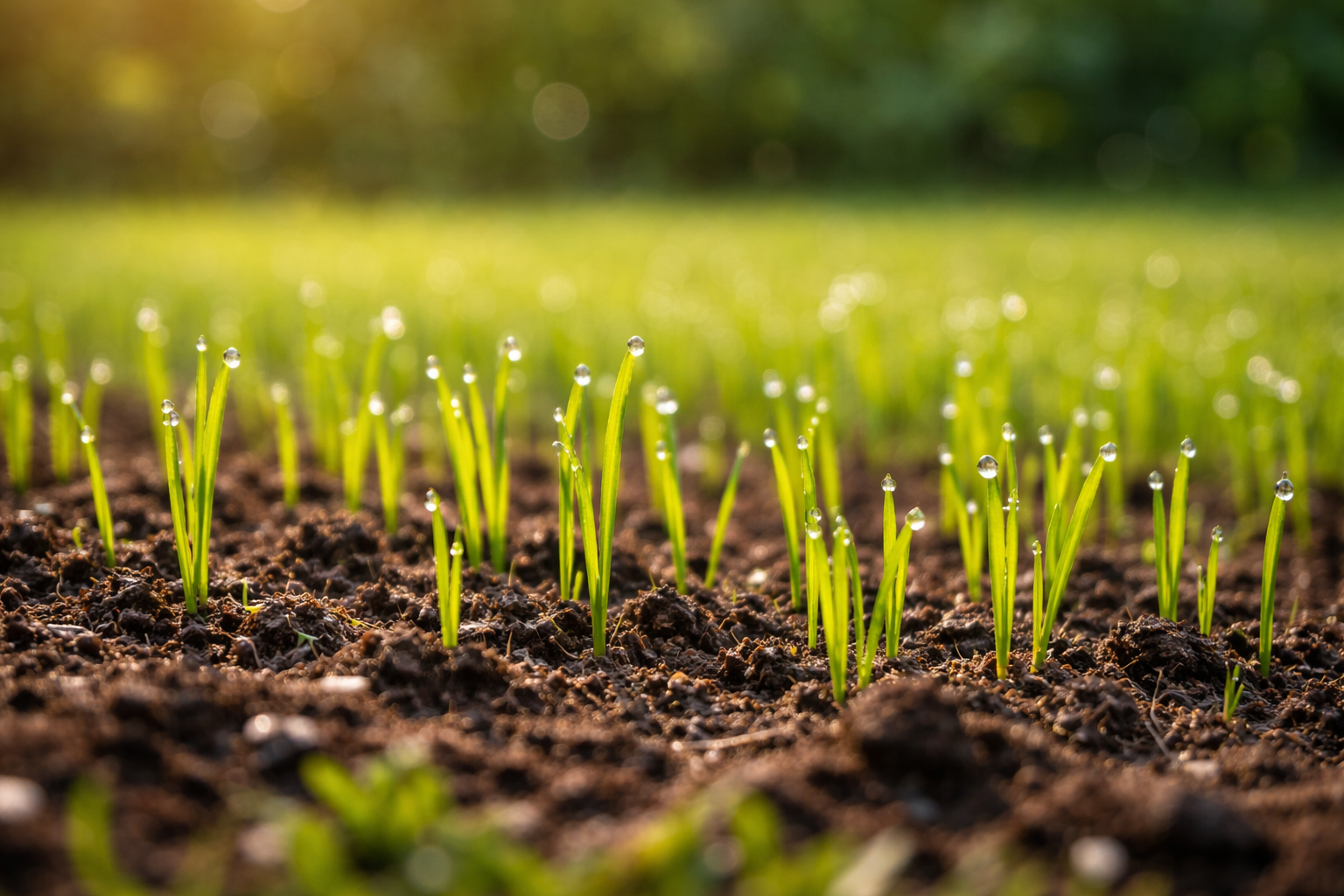
Days 7-10: First seedlings appear (ryegrass first, then fescue, then bluegrass). They look like thin, bright green wisps. Encouraging.
Days 14-21: Significant seedling emergence. You can clearly see new grass filling in thin areas. The lawn starts looking promising.
Days 28-35: New grass is thick enough for its first mow. The thin spots are filling in. Weeds are getting crowded out.
Days 42-60: New grass has blended with existing grass. The lawn looks noticeably thicker and more uniform.
3-6 months: Full establishment. The overseeded grass is indistinguishable from the existing lawn. Root systems are deep and established.
Can You Overseed Without Aerating?
Yes. Aeration makes overseeding dramatically more effective, but it's not strictly required. If you can't aerate, focus on:
- Mowing very short (scalping)
- Dethatching thoroughly
- Raking the soil surface to create grooves
- Using a slightly higher seed rate
Overseeding Specific Problem Areas
Dog Spot Repair
Rake out the dead grass, add a thin layer of compost, spread seed, and keep moist. Dog spots are usually nitrogen burn — the soil is fine, it just needs new grass.Under Trees
Use shade-tolerant seed (fine fescue blends for cool-season, St. Augustine for warm-season). Apply slightly higher seed rates in shade, since germination rates are lower with less sunlight. Check out our guide to the best grass for shade for species recommendations.Along Driveways and Walkways
These areas get compacted from foot traffic. Aerate specifically along edges, use a traffic-tolerant species (perennial ryegrass or Kentucky bluegrass), and consider installing stepping stones to redirect foot traffic.Slopes and Hills
Seed tends to wash downhill with rain. Apply a thin layer of straw mulch (not too thick — one straw deep) to hold seed in place. Or use an erosion control blanket for steep slopes.The Bottom Line
Overseeding is the best-kept secret in lawn care. It's cheaper than sod, easier than a full renovation, and delivers results you can see in a few weeks. The formula is simple:
- Time it right (fall for cool-season, late spring for warm-season)
- Prep the soil (mow short, dethatch, aerate if possible)
- Use quality seed that matches your existing grass
- Keep it moist (the first two weeks of watering make or break it)
- Be patient (no mowing, no foot traffic for 3-4 weeks)
And if you're not sure what grass type you're working with (which determines everything — seed choice, timing, mowing height), the Grass Identifier app can tell you in seconds. Snap a photo, get your ID, buy the right seed.
Now go overseed. Your lawn's been waiting. 🌱