How to Identify Crabgrass (And Get Rid of It Before It Takes Over Your Lawn)
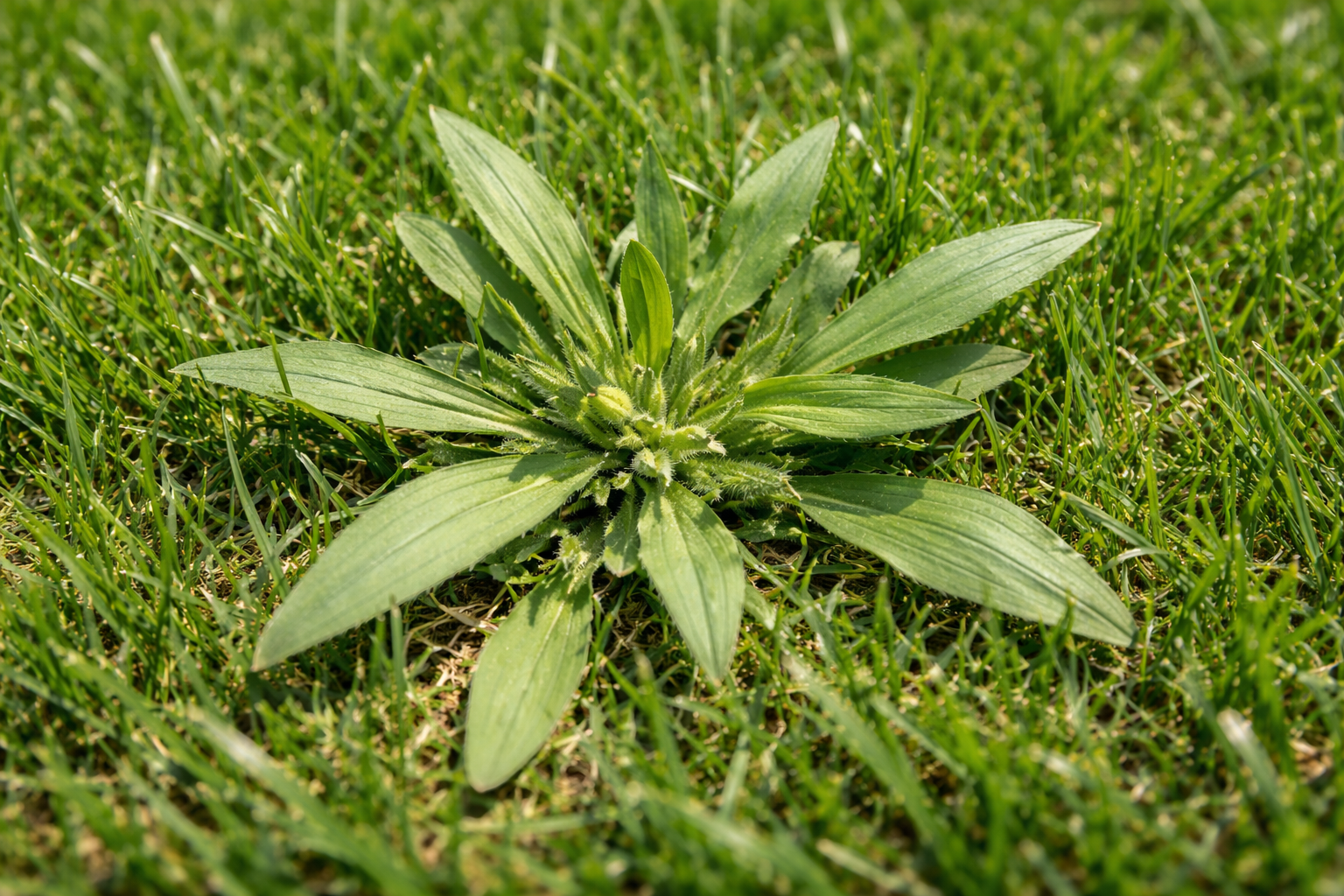
You're looking at your lawn and something doesn't belong. There's a patch of lighter, wider grass spreading out in a weird star shape, hugging the ground like it owns the place. It doesn't match the rest of your lawn. It grows faster. It looks different.
That, my friend, is almost certainly crabgrass.
Crabgrass is the most common and most hated lawn weed in America, and for good reason. Left unchecked, a single crabgrass plant can produce 150,000 seeds in a single season. Let that sink in. One plant. 150,000 seeds. Each one waiting in your soil for next spring.
The good news? Crabgrass is easy to identify once you know what to look for, and there are proven ways to both kill it and prevent it from coming back. Let's break it all down.
What Is Crabgrass, Exactly?
Crabgrass (genus Digitaria) is an annual grassy weed. That means it germinates from seed each spring, grows all summer, produces a ridiculous number of seeds, and dies with the first frost. The plant itself doesn't survive winter, but its seeds absolutely do.
There are two main species you'll encounter:
- Smooth crabgrass (Digitaria ischaemum): Shorter, with smooth leaves. More common in northern areas.
- Large or hairy crabgrass (Digitaria sanguinalis): Taller, with hairy leaf sheaths. More common in southern areas.
How to Identify Crabgrass: The Visual Checklist
Here's exactly what to look for. You don't need a botany degree — just get down on your hands and knees and compare the suspicious grass to the normal grass around it.
1. The Star-Shaped Growth Pattern
This is the most distinctive feature. Crabgrass grows outward from a central point, spreading in all directions like a star or a crab (hence the name). The stems (called tillers) radiate outward, often lying flat against the ground before turning upward at the tips.
Regular lawn grasses like Kentucky Bluegrass or Fescue grow upright from the base. They don't sprawl. If your mystery grass looks like it's trying to give the ground a hug, that's crabgrass.
2. Wide, Flat Blades
Crabgrass blades are noticeably wider than most lawn grasses. They're flat and can be up to 1/3 inch wide, sometimes even wider on large crabgrass. Compare this to Kentucky Bluegrass (about 1/8 inch wide) or Fine Fescue (hair-thin).
The blades also tend to have a slight crease or fold running down the center. They're coarser than most lawn grasses and feel rougher to the touch.
3. Light Yellow-Green Color
One of the easiest giveaways. Crabgrass is typically a lighter, more yellow-green than the surrounding lawn. It stands out like a sore thumb against a dark green Bluegrass or deep green Fescue lawn.
In mid to late summer, the color contrast becomes even more obvious as crabgrass plants mature and the surrounding grass might be stressed by heat.
4. Stems That Root at the Nodes
Here's another big clue: crabgrass stems can root at every node (joint) that touches the ground. This is how it spreads so aggressively. Each stem that touches soil can anchor itself and send out new growth. Pull up a crabgrass plant and you'll see these rooted nodes along the stems.
Your regular lawn grass doesn't do this (unless you have Bermuda or St. Augustine, which also spread via stolons, but those are wanted grasses, not weeds).
5. Finger-Like Seed Heads
In late summer, crabgrass produces seed heads that look like 3-7 finger-like spikes radiating from a central point at the top of the stem. These "fingers" are where the 150,000 seeds come from. If you see these seed heads, you're already too late for this season — but you can still plan your attack for next year.
6. It Shows Up in Summer, Not Spring
Crabgrass is a warm-season annual. It germinates when soil temperatures hit about 55-60°F for several consecutive days, which typically happens in late spring (April-May, depending on your region). It really takes off in the heat of June and July.
If you're seeing a weird grass emerge in March while everything else is still dormant, that's probably annual bluegrass (Poa annua), not crabgrass. Timing matters for identification.
Crabgrass vs. Common Lawn Grasses: How to Tell Them Apart
Sometimes the confusion isn't "is this a weed?" but rather "is this weed crabgrass or something else?" Here's how crabgrass stacks up against similar-looking grasses.
Crabgrass vs. Tall Fescue (Clumps)
Both can form clumps in your lawn. But Tall Fescue grows in upright bunches with coarse, dark green blades. Crabgrass sprawls flat and is lighter green. Tall Fescue also has visible veins running parallel on the blade, while crabgrass blades are smoother.
Crabgrass vs. Bermuda Grass
Bermuda can look similar because it also spreads via stolons. But Bermuda has much finer blades and a denser growth habit. Bermuda is also a perennial (comes back every year from roots), while crabgrass is annual (dies in winter). If it's brown and dead in winter but the roots are still alive underground, that's Bermuda. If it's completely dead, plant and all, that was crabgrass.
Crabgrass vs. Quackgrass
Quackgrass has wider blades like crabgrass but grows upright, not flat. The dead giveaway: quackgrass has clasping auricles (little claw-like appendages where the blade meets the stem). Crabgrass doesn't have these. Also, quackgrass is perennial and spreads via rhizomes underground — it's actually harder to kill than crabgrass.
Crabgrass vs. Goosegrass
Goosegrass (silver crabgrass) looks very similar but grows even flatter to the ground and has a distinctive white or silver center where the stems meet. If the center of the plant looks pale or silvery, it's probably goosegrass, not crabgrass.
Not Sure? Use Your Phone
If you're still not confident in your ID, the fastest way to confirm is to take a close-up photo and run it through the Grass Identifier app. Point your camera at the suspicious grass, snap a photo, and it'll tell you exactly what species you're looking at. It works for weeds too, not just lawn grasses.
I've found this especially useful for those tricky cases where crabgrass is growing mixed in with Bermuda or Fescue and it's hard to tell the blades apart visually.
Why Crabgrass Takes Over (And Why Your Lawn Can't Fight It)
Understanding why crabgrass invades helps you prevent it. Crabgrass doesn't show up randomly. It exploits weaknesses in your lawn:
Thin or bare spots. Crabgrass seeds need sunlight to germinate. A thick, healthy lawn shades the soil surface and prevents germination. Thin areas are an open invitation.
Short mowing. Mowing your lawn too short lets more sunlight reach the soil surface. This is one of the biggest mistakes people make. If you're scalping your Bluegrass or Fescue lawn at 2 inches or less, you're practically rolling out the red carpet for crabgrass.
Compacted soil. Crabgrass actually thrives in compacted soil where other grasses struggle. It's one of nature's pioneer plants — it colonizes disturbed, compacted, or poor soil.
Heat. Crabgrass loves heat. When your cool-season lawn is stressed and slowing down in July, crabgrass is in its prime. It fills in wherever the lawn grass weakens.
How to Get Rid of Crabgrass
Prevention (The Best Strategy)
Pre-emergent herbicide is the gold standard. Applied in early spring before crabgrass germinates (when soil temps reach about 55°F — timing with forsythia bloom is a classic trick), it creates a chemical barrier in the soil that kills crabgrass seedlings as they sprout.
Popular pre-emergent active ingredients:
- Prodiamine (long-lasting, works great)
- Dithiopyr (also stops early post-emergent crabgrass)
- Pendimethalin (found in many granular products)
Killing Existing Crabgrass
If crabgrass is already up and growing, you need a post-emergent herbicide:
- Quinclorac is the most effective option. It kills crabgrass (and several other grassy weeds) without harming most lawn grasses. Look for products containing quinclorac.
- MSMA was the go-to for years but is now restricted for residential use in many states.
- Hand-pulling works for small infestations. Get the whole root crown. Best done when soil is moist.
The Long Game (Cultural Control)
Herbicides are a tool, not the whole solution. The real long-term answer is making your lawn too thick and healthy for crabgrass to compete:
- Mow high. Keep cool-season grasses at 3-4 inches. This shades the soil and blocks crabgrass germination.
- Water deeply but infrequently. Deep watering encourages deep roots in your lawn grass. Crabgrass has shallow roots and can't compete.
- Overseed thin areas in fall. A thick lawn is your best defense. Fall overseeding gives grass time to establish before crabgrass season.
- Aerate compacted soil. This helps your lawn grass thrive in conditions that currently favor crabgrass.
- Fertilize on schedule. A well-fed lawn is a thick lawn. Feed cool-season grasses primarily in fall.
Crabgrass Season Timeline
Here's what to expect and when:
March-April: Soil warming up. Time to apply pre-emergent. Watch for forsythia blooming as your timing signal.
May-June: Crabgrass germination begins. If you missed your pre-emergent window, watch for young seedlings and treat with post-emergent early.
July-August: Peak crabgrass growth. Mature plants are harder to kill. This is when your lawn looks worst if you have a crabgrass problem.
September: Crabgrass produces seed heads. The damage is done for next year's seed bank, but the current plants will die soon.
October-November: First frost kills crabgrass plants. They turn reddish-purple, then brown. Time to overseed and strengthen your lawn for next year.
The Bottom Line
Crabgrass identification is straightforward once you know the telltale signs: star-shaped spreading pattern, wide flat blades, light yellow-green color, and stems that root at every node. If it showed up in summer, grows flat, and looks lighter than everything around it, it's almost certainly crabgrass.
The key to winning the crabgrass battle isn't just killing what's there. It's building a lawn that's thick enough and healthy enough to prevent it from germinating in the first place. Pre-emergent in spring, mow high, water deep, overseed in fall. That's the formula.
And if you want an instant ID on any grass or weed in your yard, the Grass Identifier app makes it dead simple. Snap a photo, get your answer, and move on to the fix.
Now go pull that crabgrass before it drops its seeds. 🌿