Why Is My Grass Turning Brown? 7 Causes and How to Fix Each One
Nothing ruins your morning coffee like looking out the window and seeing brown patches creeping across your lawn.
You've been watering. You've been mowing. You thought everything was fine. And now? Brown spots everywhere, and you have no idea why.
Take a breath. Brown grass doesn't always mean dead grass, and most causes are totally fixable once you know what you're dealing with.
But here's the thing: the fix depends entirely on the cause. Watering a lawn that's dying from fungus? You'll make it worse. Fertilizing a lawn with grub damage? You're wasting money. That's why diagnosis comes first.
One more important note before we dive in: different grass species respond to stress differently. A Bermuda lawn turning brown in December is completely normal (that's dormancy). A Kentucky Bluegrass lawn turning brown in July means something's wrong. If you're not sure what type of grass you have, figure that out first. It'll help you diagnose the problem way faster.
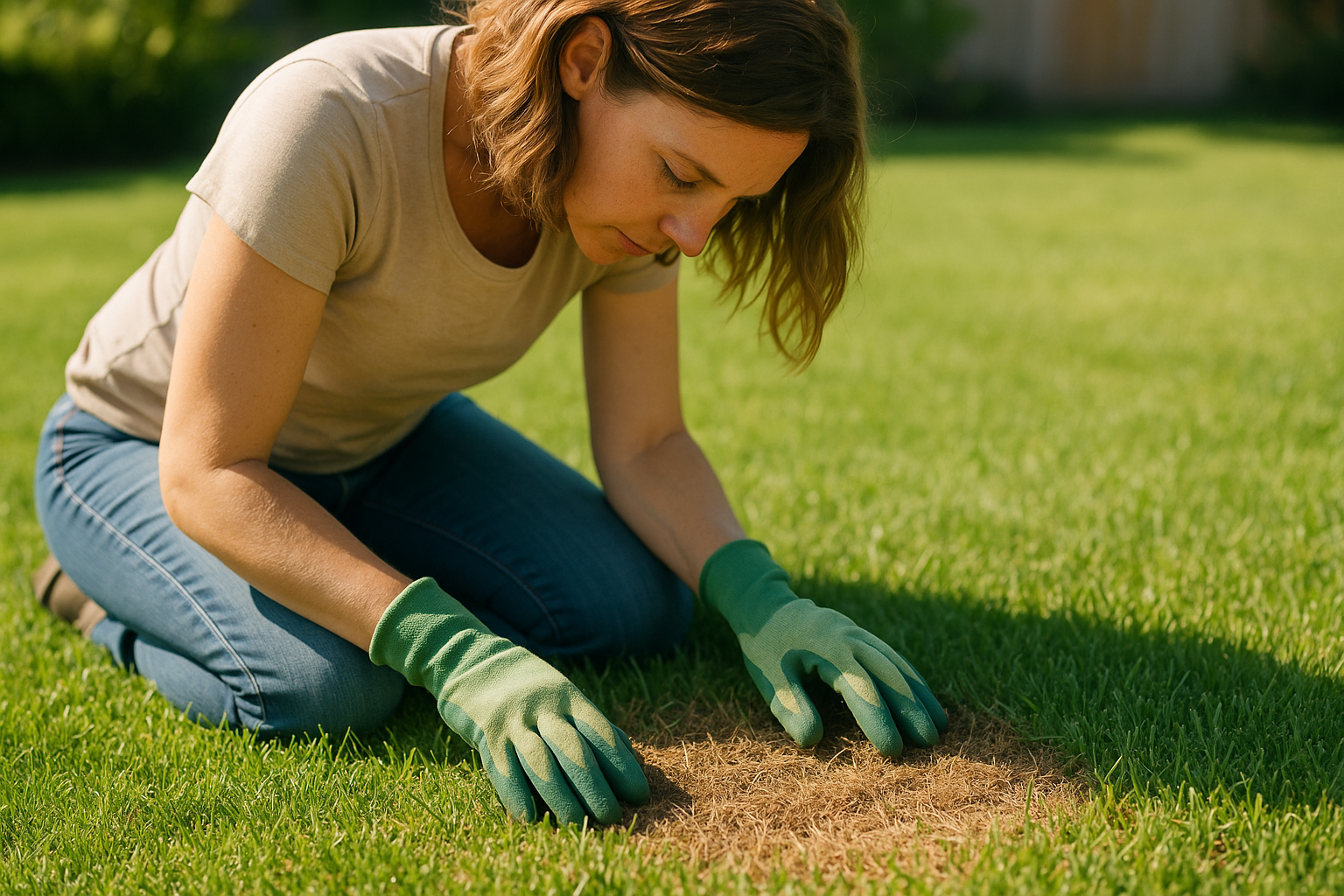
Let's go through the 7 most common causes, how to tell which one you're dealing with, and what to do about it.
1. Drought Stress (Not Enough Water)
This is the #1 cause of brown grass, bar none. And it's the most straightforward to fix.
How to diagnose it:
- The lawn looks uniformly brown or wilted (not patchy)
- Grass blades are curled or folded inward
- Footprints stay visible when you walk across the lawn (the blades don't spring back)
- The soil feels dry when you poke a screwdriver into it (hard to push in)
- It hasn't rained in a while, or you've been skipping waterings
How to fix it:
- Water deeply and less frequently. You want about 1 inch of water per week, applied in 1-2 sessions. Deep watering encourages deep roots. Frequent light watering creates shallow roots that dry out fast.
- Water in the early morning (6-10 AM). This reduces evaporation and gives the grass time to dry before night, which prevents fungal issues.
- Do the tuna can test: Place empty tuna cans around your lawn while the sprinkler runs. When they've got an inch of water in them, that's enough.
2. Fungal Disease
If you're seeing irregular brown patches with distinct borders, there's a good chance fungus is involved. Lawn fungus thrives when conditions are warm and humid, especially when grass stays wet overnight.
Common lawn diseases that cause browning:
- Brown Patch: circular patches, 6 inches to several feet across, with a dark "smoke ring" border. Common in Tall Fescue and Ryegrass.
- Dollar Spot: small, silver-dollar-sized tan spots that can merge into larger areas. Loves under-fertilized lawns.
- Summer Patch: irregular dead patches, usually in Bluegrass, during hot weather. Grass pulls up easily.
- Rust: your shoes turn orange-brown after walking through the lawn. Grass blades have powdery orange spots.
How to diagnose it:
- Patches have irregular or circular shapes with distinct borders
- You might see a slimy or gray-white cobwebby growth on the grass in early morning (before dew dries)
- Browning appeared quickly (over a few days), not gradually
- The weather has been hot AND humid, or you've been watering in the evening
How to fix it:
- Stop watering in the evening. This is the single most impactful thing you can do. Morning watering only.
- Improve air circulation by pruning overhanging branches or removing debris.
- Don't over-fertilize with nitrogen in summer. Lush growth is fungus food.
- Apply a fungicide if needed. Look for products containing propiconazole or azoxystrobin for most common lawn diseases.
- For chronic issues, consider overseeding with disease-resistant grass varieties.
3. Grub Damage
Grubs are the larvae of beetles (Japanese beetles, June bugs, etc.), and they live underground eating your grass roots. By the time you see the brown patches, they've been munching away for weeks.
How to diagnose it:
- Brown patches that appear in late summer or early fall
- The dead grass pulls up like a carpet, easily, with no roots holding it down. This is the telltale sign.
- You can see white, C-shaped grubs when you peel back the turf
- You might notice increased bird, skunk, or raccoon activity on your lawn (they're digging for the grubs)
How to fix it:
- Check the grub count. Cut a 1-square-foot section of turf, peel it back, and count the grubs. More than 10 per square foot = treatment time.
- Apply a grub killer containing chlorantraniliprole (preventive, apply in spring) or trichlorfon (curative, apply when you see damage).
- For organic options, beneficial nematodes or milky spore disease target grubs specifically.
- Reseed or resod the damaged areas after treatment. The grass won't grow back on its own where roots have been destroyed.
4. Dog Urine Spots
If you've got a dog, you've probably got these. Dog urine is high in nitrogen, which sounds like it should be good for grass, but the concentration is so high in one spot that it literally burns the grass. Classic dog urine spots have a brown center surrounded by a ring of extra-green grass (where the nitrogen was diluted to a helpful level).
How to diagnose it:
- Small (6-12 inch) round brown spots scattered around the lawn
- Bright green ring around each brown spot
- Spots correspond to where your dog likes to go
- More common with female dogs (they squat in one spot vs. male dogs who spread it around)
How to fix it:
- Water the spot immediately after your dog goes. This dilutes the nitrogen before it burns. Even just dumping a watering can on it helps a lot.
- Train your dog to use one area of the yard (ideally a mulched or gravel area).
- Reseed damaged spots. Rake out the dead grass, add a thin layer of compost, spread seed, and keep it moist.
- Don't bother with "lawn saver" supplements for your dog. The research on those is pretty iffy, and some vets have concerns about them.
5. Dormancy (The One That's Not Actually a Problem)
Here's the thing a lot of people don't realize: brown grass isn't always sick grass. Sometimes it's just sleeping.
Warm-season grass dormancy:
Bermuda, Zoysia, St. Augustine, and Centipede all go dormant and turn brown in winter when temperatures drop below 50-55°F. This is 100% normal. Your grass is alive. It's just conserving energy until spring.Cool-season grass dormancy:
Kentucky Bluegrass, Fescue, and Ryegrass can go dormant in extreme summer heat (above 90°F for extended periods). They turn brown to survive. Once temperatures cool down, they'll come back.How to diagnose it:
- Timing matches the pattern: Warm-season grass browning in late fall/winter = dormancy. Cool-season grass browning during a heat wave = dormancy.
- The browning is uniform across the whole lawn (not patchy)
- The crowns of the grass plants are still firm and alive (pull one up and check)
- It happened gradually, not overnight
What to do:
- Nothing. Seriously. Leave it alone. Don't fertilize dormant grass. Don't try to force it out of dormancy with extra water.
- For warm-season lawns, you can overseed with annual ryegrass in fall for winter color if the brown look bothers you.
- For cool-season lawns going dormant in summer, water lightly (about half an inch per week) just to keep the crowns alive, but don't try to keep it fully green during extreme heat.
6. Thatch Buildup
Thatch is a layer of dead grass stems, roots, and debris that builds up between the green grass and the soil surface. A thin layer (under half an inch) is actually helpful. It insulates the soil and retains moisture. But when it gets thick, it becomes a problem.
How it causes browning:
- Thick thatch prevents water from reaching the soil, so grass roots stay shallow and dry out
- It creates a perfect environment for fungal disease
- Grass roots start growing INTO the thatch layer instead of the soil, making them vulnerable to heat and drought
How to diagnose it:
- Cut a small wedge out of your lawn and look at the cross-section
- If there's more than half an inch of brownish, spongy material between the green grass and the soil, you've got a thatch problem
- Your lawn might feel spongy or bouncy when you walk on it
- Water seems to run off instead of soaking in
How to fix it:
- Dethatch mechanically using a dethatching rake (small lawns) or a power dethatcher/verticutter (larger areas). Best done when grass is actively growing (fall for cool-season, late spring for warm-season).
- Core aerate annually. Aeration pulls plugs of soil out of the lawn, which breaks up thatch and improves soil drainage. This is probably the single best thing you can do for an established lawn.
- Don't bag your clippings (clippings break down fast and don't cause thatch), but DO avoid over-fertilizing, which produces excessive growth that contributes to thatch.
7. Compacted Soil
If your lawn gets a lot of foot traffic (kids playing, pets running, regular mowing on the same path), the soil underneath gets packed down like concrete. Compacted soil prevents water, air, and nutrients from reaching the roots.
How to diagnose it:
- Brown or thin grass in high-traffic areas (paths, around play equipment, near gates)
- Water puddles on the surface instead of soaking in
- Soil feels rock-hard when you try to push a screwdriver into it
- Grass just looks thin and tired in those areas, even with proper watering
How to fix it:
- Core aeration is the answer. Rent a core aerator and go over your lawn (especially the compacted areas) when the grass is actively growing.
- For heavily compacted areas, you might need to aerate twice, once in one direction, then again at a 90-degree angle.
- Top-dress with compost after aerating. The compost will fall into the aeration holes and improve the soil structure over time.
- Reduce traffic where possible, or install stepping stones through high-traffic paths.
How to Narrow It Down
If you're looking at brown grass and not sure which of these seven causes is the culprit, here's my diagnostic process:
- Check the calendar. Is your grass type supposed to be dormant right now? If so, that's probably all it is.
- Check the pattern. Uniform browning = drought or dormancy. Patchy = disease, grubs, or dog spots. In traffic areas = compaction.
- Do the tug test. Grab a handful of the brown grass and pull. Comes up like a carpet with no roots? Grubs. Doesn't budge? Drought, disease, or dormancy.
- Check the soil. Poke a screwdriver in. Dry and hard = drought or compaction. Moist but grass is still brown = disease.
- Look at the timing. Came on overnight or over a few days? Probably disease. Been gradual over weeks? Drought, compaction, or thatch.
The Bottom Line
Brown grass happens to everyone. Even the lawn nerds (especially the lawn nerds, honestly). We notice every imperfection).
The key is to stay calm, diagnose before you treat, and remember that most causes are fixable. Even grub damage, which looks devastating, can be repaired with treatment and reseeding.
Your lawn wants to be green. It's literally what grass does. Give it what it needs, remove what's stressing it, and it'll bounce back.
Now go outside and do the tug test. 💪