When to Aerate Your Lawn (And How to Do It Right)
Your neighbor just ran a weird machine across their lawn and now there are little dirt cylinders everywhere. It looks like a gopher had a field day. But two weeks later? Their lawn looks incredible. Thick, deep green, no bare spots.
That's aeration, and it might be the single most underrated thing you can do for your lawn.
If you've never aerated — or you tried it once at the wrong time and saw zero results — this guide will set you straight. Timing is everything with aeration, and getting it wrong is almost worse than not doing it at all.
What Is Lawn Aeration (And Why Should You Care)?
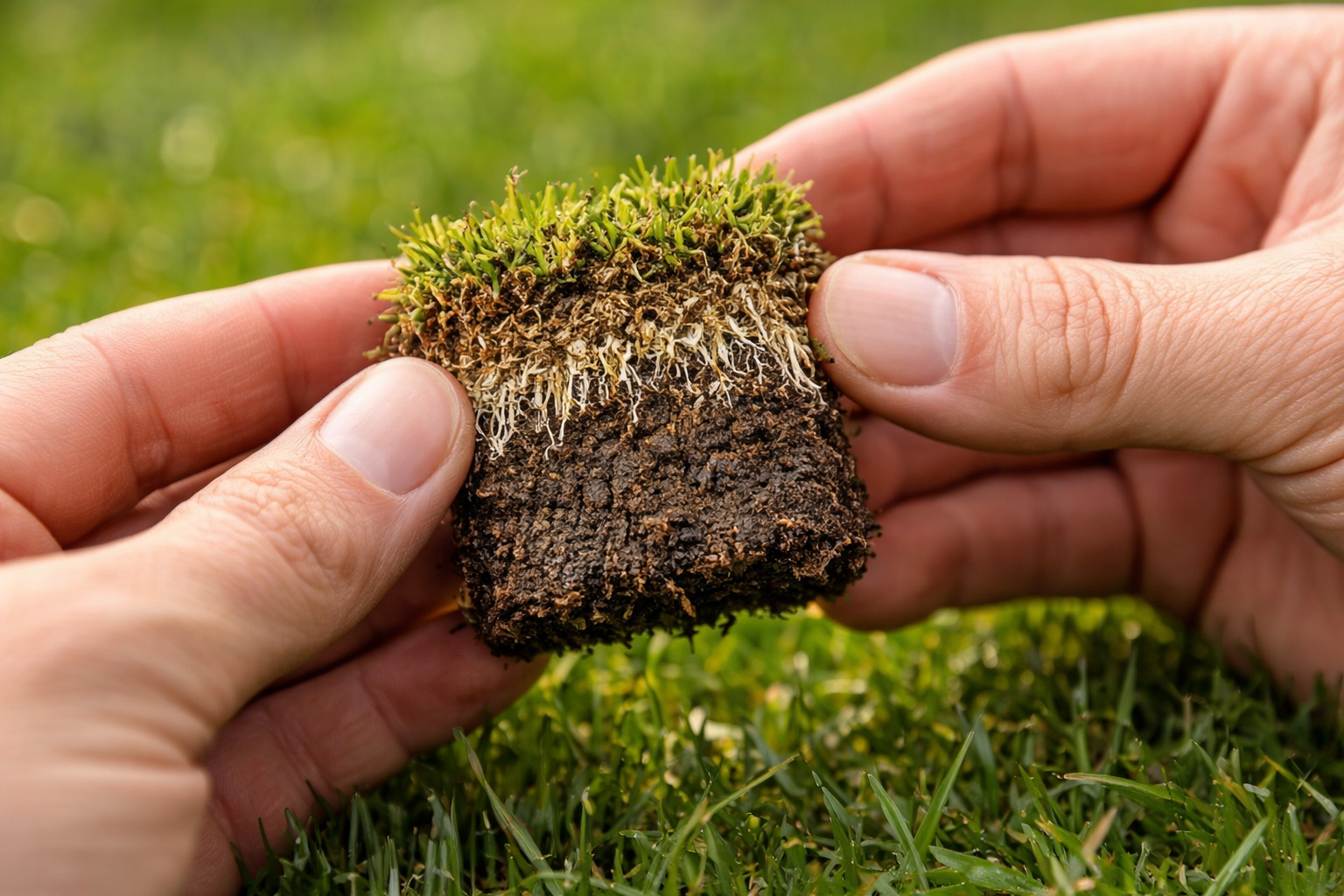
Aeration is exactly what it sounds like: putting air into your soil. Specifically, a core aerator pulls small plugs of soil (about 2-3 inches deep and half an inch wide) out of the ground, leaving holes that allow air, water, and nutrients to reach the root zone.
Over time, soil gets compacted. Foot traffic, mowing, rain, even gravity — it all presses soil particles tighter and tighter together. Compacted soil is terrible for grass because:
- Water can't penetrate — it runs off the surface instead of soaking in
- Roots can't expand — they stay shallow and weak
- Nutrients don't reach the roots — fertilizer just sits on top
- Thatch builds up — dead organic matter can't decompose properly
The result? Deeper roots, better drought tolerance, thicker growth, and a lawn that actually uses the water and fertilizer you're giving it instead of wasting half of it.
When to Aerate: The Short Answer
Aerate during your grass's peak growing season. That's it. That's the rule.
- Cool-season grasses (Kentucky Bluegrass, Fescue, Ryegrass): Early fall is ideal. Late August through October, depending on your region. Spring (April-May) is the second-best window.
- Warm-season grasses (Bermuda, Zoysia, St. Augustine, Centipede): Late spring to early summer. May through June, when these grasses are growing their fastest.
When NOT to Aerate
This is just as important as knowing when to do it:
Don't aerate during drought or extreme heat. If your cool-season lawn is already stressed and browning in July, aeration will make things worse. The open holes will dry out the root zone even faster.
Don't aerate frozen or waterlogged soil. The aerator can't pull clean plugs from frozen ground, and waterlogged soil will just smush closed again immediately.
Don't aerate a brand-new lawn. If you've seeded or sodded within the last year, give the roots time to establish before punching holes through them.
Don't aerate right before a weed-heavy season without a plan. Those aeration holes are perfect germination spots for weed seeds too. If you aerate in spring, be aware that crabgrass and other summer annuals might take advantage. (This is one reason fall aeration is preferred for cool-season lawns — fewer weeds competing.)
The Timing Chart: When to Aerate by Grass Type
Here's the specific timing for the most common lawn grasses. Not sure what grass you have? The Grass Identifier app can tell you in seconds — just snap a photo.
Cool-Season Grasses
Kentucky Bluegrass Best time: September–October Second best: April–May Avoid: June–August (heat stress period)
Tall Fescue Best time: September–October Second best: March–April Avoid: July–August
Perennial Ryegrass Best time: September–October Second best: April–May Avoid: Mid-summer
Fine Fescue Best time: September–early October Second best: April Avoid: Summer (Fine Fescue is already stress-prone in heat)
Warm-Season Grasses
Bermuda Grass Best time: May–June Second best: April or July (if growth is still strong) Avoid: October–March (dormancy)
Zoysia Grass Best time: May–June Second best: Late April Avoid: Fall and winter
St. Augustine Grass Best time: May–June Second best: April (in deep south) Avoid: Fall/winter, and be careful — St. Augustine recovers slower than Bermuda
Centipede Grass Best time: Late May–June Avoid: Centipede is sensitive — only aerate if you have confirmed compaction issues. Over-aerating can stress it.
How to Tell If Your Lawn Actually Needs Aeration
Not every lawn needs aeration every year. Here are the signs that it's time:
The Screwdriver Test
Push a screwdriver into your lawn. If it goes in easily to 3-4 inches, your soil is probably fine. If it feels like you're trying to stab concrete? Time to aerate.The Puddle Test
After a normal rain, does water sit on the surface in puddles instead of soaking in? That's compacted soil refusing to let water through.The Bounce Test
Walk across your lawn. Does it feel hard and unyielding under your feet? Healthy soil has some give to it. If it feels like walking on a packed dirt path, you need aeration.High-Traffic Areas
If you have kids, dogs, or regular foot traffic paths, those areas are almost certainly compacted. Even if the rest of the lawn is fine, those zones probably need help.Thatch Buildup
Cut a small cross-section of your lawn. If there's more than half an inch of brown, spongy material between the green grass and the soil, aeration (combined with dethatching) will help break it down.Heavy Clay Soil
If you have clay soil (sticky when wet, rock-hard when dry), you probably need to aerate annually. Clay compacts much more aggressively than sandy or loamy soils.Types of Aeration: Core vs. Spike
Not all aeration is created equal. There are two main methods, and one is significantly better than the other.
Core Aeration (The Good One)
A core aerator (also called a plug aerator) uses hollow tines to pull actual plugs of soil out of the ground. These plugs are left on the surface, where they break down over a week or two and return their nutrients to the soil.
Why it works: It physically removes soil, creating real space for air, water, and roots. The remaining soil can expand into the gaps, reducing compaction at a structural level.
The equipment: You can rent a core aerator from most home improvement stores for about $75-100 per day. They're heavy machines (usually gas-powered) that look like oversized lawn mowers. For small lawns, manual core aerators (step-on tools) work but take more elbow grease.
Spike Aeration (The Okay One)
Spike aerators poke solid holes into the ground without removing soil. This includes those aerator shoes with spikes on the bottom that you see on infomercials.
The problem: Spike aeration can actually make compaction worse in some cases. By pushing soil aside without removing it, you're compressing the soil around each hole even more tightly. It's better than nothing for very light compaction, but it's not in the same league as core aeration.
Bottom line: If you're going to aerate, use a core aerator. Always.
How to Aerate Your Lawn: Step by Step
1. Water the Day Before
The soil should be moist (not soaking wet) when you aerate. Moist soil lets the tines penetrate cleanly and pull out intact plugs. Dry, hard soil will fight the machine and produce shallow, crumbly plugs. Waterlogged soil will just close up behind the tines.
Water your lawn normally the day before you plan to aerate. If it rained recently, you're probably good.
2. Mark Your Sprinkler Heads and Utilities
Core aerators will destroy sprinkler heads, shallow irrigation lines, and invisible fence wires. Mark everything with flags before you start. If you're unsure about underground utilities, call 811 (in the US) for a free locate.
3. Make Two Passes
Run the aerator across your entire lawn, then make a second pass perpendicular to the first (like mowing in a crosshatch pattern). This doubles the number of holes and provides more thorough coverage. For severely compacted areas, a third pass doesn't hurt.
4. Leave the Plugs
I know they look ugly. Resist the urge to rake them up. Those plugs contain soil microorganisms and nutrients that you want back in your lawn. They'll break down on their own within 1-2 weeks. Mowing over them can speed this up.
5. Overseed (If It's Fall)
This is the secret weapon. Aeration + overseeding in fall is the single best thing you can do for a cool-season lawn. Those aeration holes are perfect seed beds — protected from surface disturbance, in direct contact with soil, and with great seed-to-soil contact.
Spread seed immediately after aerating, before the holes start to close. For cool-season lawns, use about 3-4 pounds of seed per 1,000 square feet for overseeding.
6. Fertilize
Right after aerating is also the ideal time to fertilize. Those holes give the fertilizer a direct path to the root zone instead of sitting on top of compacted soil. Use a starter fertilizer if you're overseeding, or a standard fall fertilizer if you're not.
7. Water Consistently
After aerating (and especially if you've overseeded), keep the lawn consistently moist for 2-3 weeks. Not saturated, just moist. If you've overseeded, the new seeds need consistent moisture to germinate.
The Aeration + Overseeding Power Combo
I keep mentioning this combo because it's genuinely the best one-two punch in lawn care. Here's why they work so well together:
Aeration creates perfect seed beds. Each hole is a protected pocket where seed can germinate without being washed away, eaten by birds, or dried out by sun.
New grass fills in thin spots. As existing grass ages, it can thin out. Overseeding introduces young, vigorous grass plants that thicken up the lawn.
Variety strengthens the lawn. Using an improved cultivar or a blend when overseeding adds genetic diversity. This makes your lawn more resistant to diseases, pests, and weather extremes.
The timing aligns perfectly. For cool-season grasses, fall is ideal for both aeration and seeding. Warm soil promotes germination, cooling air temperatures reduce stress, and winter gives the young grass time to establish before summer heat arrives.
If you only do one lawn care task all year, make it fall aeration + overseeding. It's that impactful.
How Often Should You Aerate?
- Heavy clay soil or high-traffic lawns: Every year
- Average soil, moderate traffic: Every 1-2 years
- Sandy soil, low traffic: Every 2-3 years (sandy soil doesn't compact as much)
- New construction lawns: Aerate after the first full growing season, then annually for the first 3 years. Construction equipment really does a number on soil compaction.
Common Aeration Mistakes
Aerating at the Wrong Time
The #1 mistake. Aerating during dormancy or stress just damages your lawn without any benefit. Match the timing to your grass type's peak growth period.Not Watering Before
Dry soil = shallow plugs = wasted effort. Always water the day before.Only Making One Pass
A single pass helps, but two perpendicular passes provide dramatically better coverage. Those extra 30 minutes are worth it.Raking Up the Plugs
Leave them. They look messy for a week. Your lawn will look amazing for months.Using a Spike Aerator for Serious Compaction
Spike aerators are a band-aid. For real compaction, only core aeration does the job.Aerating Then Applying Pre-Emergent
If you've just applied crabgrass preventer or another pre-emergent herbicide, don't aerate. The aeration holes break the chemical barrier and render it useless. Schedule aeration BEFORE pre-emergent application, or skip the pre-emergent that year.DIY vs. Hiring a Pro
DIY cost: $75-100 for a rental aerator (half-day or full-day rental). You'll also need a vehicle that can transport it (they're heavy).
Pro cost: $75-200 for an average residential lawn (5,000-10,000 sq ft). Many lawn care companies offer aeration + overseeding packages in fall for $200-400.
My take: If you're physically able and your lawn is under 8,000 square feet, renting and doing it yourself is straightforward. The machines are simple to operate — just walk behind them like a mower. For larger properties or if you want it done perfectly, hiring a pro is worth the convenience.
What to Expect After Aeration
Week 1: Your lawn looks like a war zone. Dirt plugs everywhere, visible holes, possibly some brown stress marks from the machine. Totally normal.
Week 2: Plugs start breaking down (faster if you mow over them). If you overseeded, you might see the first tiny grass seedlings emerging.
Week 3-4: Holes are mostly closed. New seedlings are growing. The lawn starts looking noticeably greener and thicker than before.
Month 2-3: The full effect kicks in. Deeper root growth, improved water absorption, thicker turf. This is when you really appreciate what aeration does.
Not Sure What Grass You Have?
Everything about aeration timing depends on knowing your grass type. If you're not sure whether you've got Kentucky Bluegrass, Bermuda, Fescue, or something else entirely, don't guess.
The Grass Identifier app can tell you exactly what species you're dealing with in seconds. Just snap a close-up photo of your grass blades and get an instant ID with full care instructions. Knowing your grass type means you'll aerate at the right time, overseed with the right species, and get the best results.
The Bottom Line
Aeration isn't glamorous. It doesn't give you instant results like a fresh mow or a bag of fertilizer. But over time, it's probably the single most impactful thing you can do for your lawn's long-term health.
The formula is simple:
- Know your grass type
- Aerate during peak growth season
- Use a core aerator, not spikes
- Overseed and fertilize right after
- Water consistently for 2-3 weeks
Now go check your soil with a screwdriver. If it doesn't slide in easily? You know what to do. 🌱